Journal / How-to · 7 min read ·
How to clean a portable espresso maker (and keep it pulling good shots)
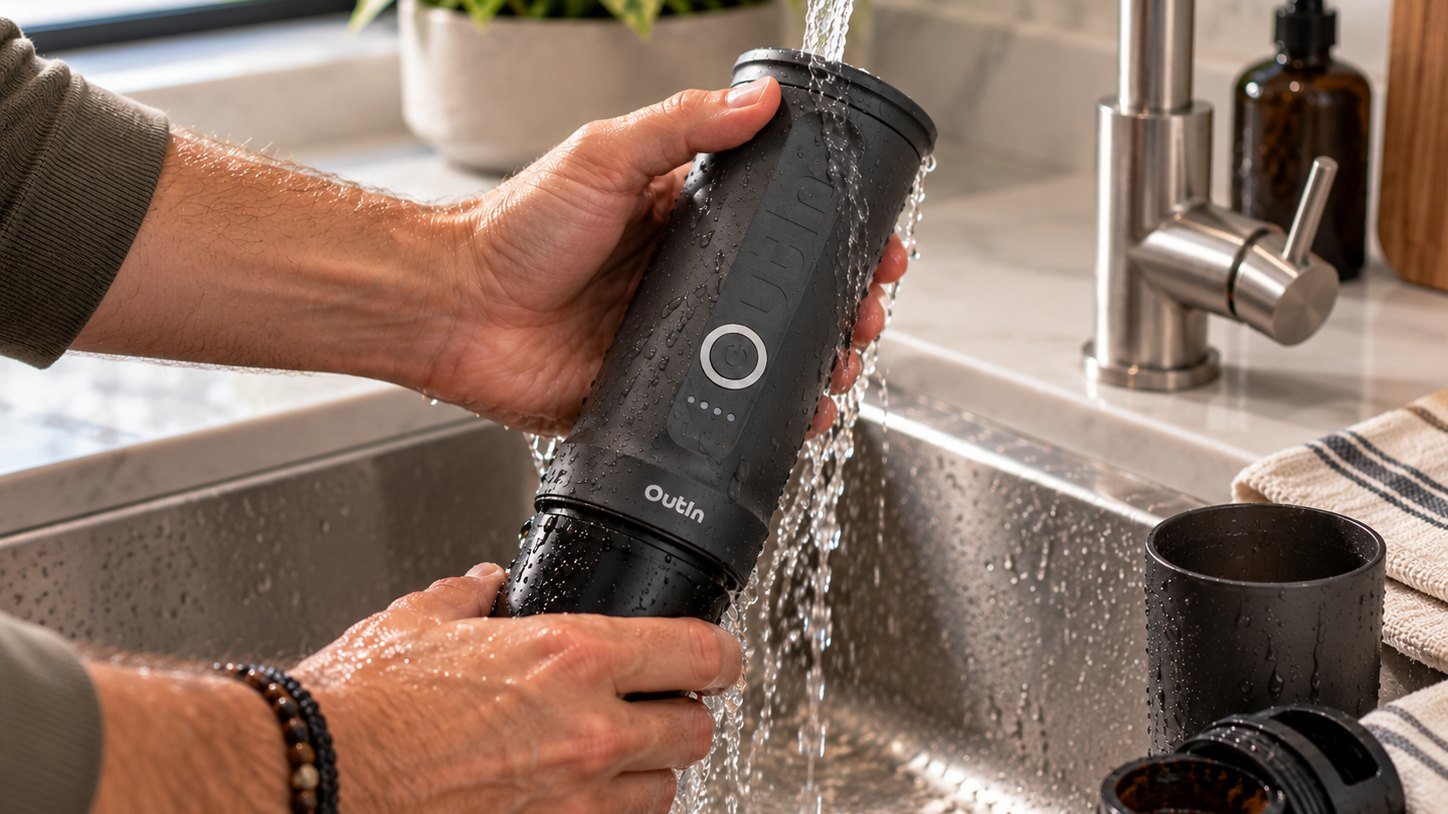
A two-minute routine after every shot, a deeper clean when pressure drops, and what to do with grounds and rinse water when there is no sink.
As an Amazon Associate, The Brew Method earns from qualifying purchases.
Portable espresso makers are small, which makes them easy to neglect. A little coffee oil and a few stray grounds do not seem like much, but on a machine this size they are enough to break a seal, slow a shot or add a stale taste. The good news: keeping one clean takes about two minutes, as long as you do it every time.
The 2-minute routine after every use
- Remove the puck right away. Wet grounds left in the basket dry into a crust and stain parts.
- Rinse the basket, portafilter and cup under warm water. A soft brush helps with the screen.
- Wipe the rim and seals. Grounds on a rubber seal are what cause leaks next time.
- Shake out water and let it dry open, not sealed in its case. Trapped moisture is how makers start to smell.
Model by model
| Maker | Dish soap | Dishwasher | Watch out for |
|---|---|---|---|
| OutIn Nano 2 | Yes, on removable parts | No | Never submerge the body; boiling water can fade the shell |
| Wacaco Nanopresso | Rinse with water | No | Grounds on the orange seal cause pressure leaks |
| Wacaco Picopresso | Rinse with water | No | Keep the basket and portafilter free of old oils |
| AeroPress Go | Yes | Top rack | Store with the plunger pushed all the way through |
| Bialetti Moka Express | No | No | Dry fully before reassembling; no abrasives |
From each manufacturer’s care guidance. When in doubt, follow the manual that came with your maker.
OutIn Nano 2
The Nano 2 has a battery and heater inside, so treat the body like a phone, not a cup. OutIn recommends cleaning with a sponge and detergent, and warns that pouring boiling water over the outer shell can fade its finish. Clean the removable parts (the coffee cup, the ground-coffee basket and the capsule adapter) under the tap, and only wipe the body. It is splash resistant, not waterproof. OutIn also suggests using pure water instead of mineral water, which can lead to scale over time. See the Nano 2 page for what comes in the box.
Wacaco Nanopresso and Picopresso
For the Nanopresso, Wacaco’s own advice centers on the seals. Brush the rim near the orange seal after use so grounds cannot stop it from sealing. If you notice pressure leaks, slide the seal off and rinse it and the nozzle under running water. Once or twice a year, the metal mesh can be removed (three small screws) and rinsed. The Picopresso follows the same idea: rinse the basket, screen and portafilter after every shot, and keep its seals free of grounds.
AeroPress Go
The easiest of the group. The plunger wipes the chamber as you press, so a quick rinse is usually all it needs, and AeroPress says its standard models can go on the top rack of the dishwasher. Two habits keep it working for years: eject the puck right after brewing, and store it with the plunger pushed all the way through so the rubber seal is not compressed. If the seal feels sticky, take it off the plunger and wash it with warm water and dish soap.
Bialetti Moka Express
The classic aluminum moka pot has its own rules: warm water only, no soap, no dishwasher, no steel wool. Dry every part with a towel and let it air out before screwing it back together, which prevents oxidation. Check the rubber gasket and filter plate from time to time and replace them when they wear out. A brand-new pot tastes better after brewing two or three pots that you throw away.
When shots get weak: the deeper clean
If your maker suddenly struggles to build pressure, leaks around the rim or pulls a thin shot, it is rarely broken. Work through this list before anything else:
- Seals and gaskets: remove the ones designed to come off, rinse them and the surfaces they sit on, and reseat them carefully.
- Screens and meshes: hold them up to the light. Blocked holes mean a slow, uneven shot.
- Basket: old coffee oil builds up into a dark film. A wash with warm water (and dish soap, where the maker allows it) clears it.
- Grind: a grind that is too fine can choke a portable maker. If the parts are clean, adjust the coffee before blaming the machine.
Cleaning at camp, with no sink
- Pack out your grounds. Coffee grounds are trash, not compost, on the trail. A small zip bag does the job.
- Use little water. A splash to rinse, then a wipe with a cloth or paper towel.
- Scatter rinse water far from streams and lakes, about 200 feet (70 big steps) away, following Leave No Trace principles.
- Dry before packing. Leave the parts open in the sun for a few minutes, then pack them loosely.
More tips for brewing outdoors are in our guide to making espresso while camping.
FAQ
How often should I clean my portable espresso maker?
Rinse it after every use, clean the seals whenever shots start leaking or losing pressure, and do a deeper clean of screens and meshes a couple of times a year.
Can I put a portable espresso maker in the dishwasher?
Usually not. The AeroPress Go is the exception: standard AeroPress models can go on the top rack. Battery-powered makers like the Nano 2 should never be submerged, and an aluminum Bialetti moka pot should be washed by hand with warm water only.
Why is my portable espresso maker leaking?
Most often, coffee grounds on a seal or rim. Clean the seal and the surface it presses against, make sure the parts are tightened properly, and check that your grind is not too fine.
What water should I use?
Filtered or soft water when you can. Hard or mineral water leaves scale over time, and OutIn specifically recommends pure water over mineral water for its Nano machines.
OutIn Nano 2: Self-heating, battery-powered, and small enough for a jacket pocket. Check price on Amazon